Portland, Oregon, agencies urge residents to plan for snow before it's forecast
3 minute read
Drivers, transit riders and pedestrians in Portland, Oregon, are being told to prepare for snow and ice before any is forecast, and the state warns its crews may be slower in major storms.
Wendy Cawley, interim director of the Portland Bureau of Transportation, or PBOT, made that case at the bureau's yearly winter preparedness news conference. ODOT, the Oregon Department of Transportation, co-hosted the event at its Sylvan Yard in Southwest Portland, the bureau said in a news release.
"The holiday travel season has arrived," Cawley said.
Kacey Davey, ODOT's lead public information officer, said the agency expects to handle winter maintenance much as it has in recent years. Stretched resources could change that.
"When resources are stretched thin, it may take longer for our crews to respond in some areas, especially during major storms," Davey said.
Within the city, PBOT runs the winter weather response.
"Don't wait until there's snow in the forecast," Cawley said. Her advice was to begin with an emergency plan drawn up with family or co-workers.
"Your first option is to always avoid traveling in severe weather," she said.
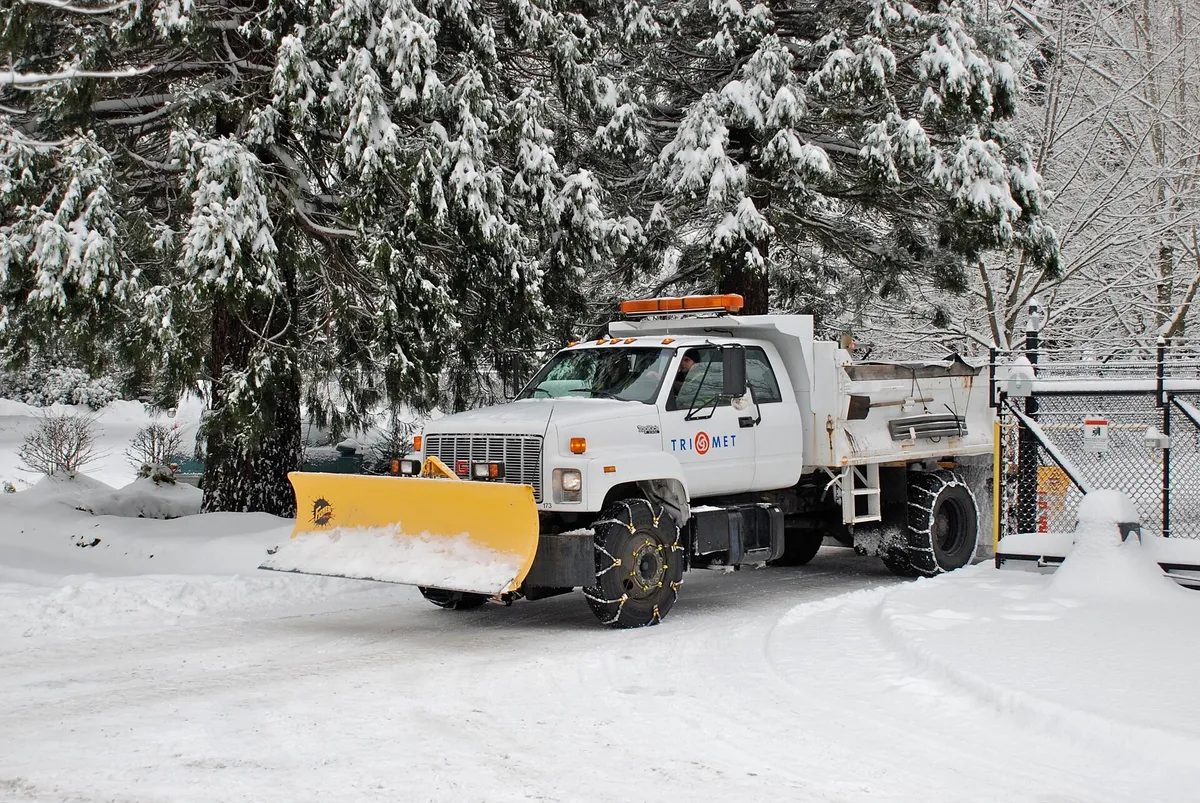
So that buses can keep running in storms, PBOT clears the routes used by TriMet, the Portland-area transit agency. Getting more people onto transit frees up road space for first responders and helps head off crashes, Cawley said.
Whether the city sees a dusting of snow or more, TriMet crews will try to keep service going "as long as conditions allow," said Inessa Vitko, the agency's chief operations officer.
Once snow or ice is in the forecast, riders are asked to look at trimet.org/alerts before they set out and again as the day goes on. TriMet also wants them to give themselves extra time and dress for the cold. They should watch their footing on slick sidewalks, streets and platforms, and wait at stops well away from the curb until a bus has fully halted.
"Winter weather can make driving conditions treacherous, sometimes with little warning," said Sgt. Betsy Hornstein of the Portland Police Bureau's Traffic Division.
She urged drivers to slow down, build in extra time and leave a safe gap.
For the Washington State Department of Transportation, or WSDOT, winter storms mean crews working day and night so I-5, I-205, SR 14 and SR 500 stay open.
Jack Armstrong, a WSDOT snowplow driver, asked drivers who come up on a plow to ease off, give it more room and pass only when it's safe.
Before leaving, travelers should look up weather and road conditions on WSDOT's mobile app or real-time travel map, the agency said, and never while they're at the wheel.
On PBOT's Winter Weather Center, maps show snow and ice routes and traffic cameras, along with areas of high elevation at 500 or 1,000 feet. When snow or ice hits, the center tracks the city's plows and other winter trucks as they move, in real time, and posts forecasts and road closures.
ODOT's TripCheck has added mountain icons to its map this year, putting pass conditions and traffic cameras together in a single spot.
Winter tips are posted at Portland.gov/winter, and residents can sign up for traffic advisories by text message or email.
PBOT posts as PBOTinfo on Facebook, Instagram and BlueSky, while Tripcheck.com carries current road conditions.
You May Also Like
Home Office pulls approval for some motorway speed cameras in England
National Highways is ending a camera supplier contract after faults from a…
Florida DOT and one.network launch work zone safety pilot project
Road management software as a service (SaaS) technology provider one.network has launched…
In-app drink-riding test launched for e-scooter riders
Micro-mobility provider Tier has unveiled a new bespoke in-app test to deter…
Lorry safety scheme delivers improvements in London
One year on from the launch of Transport for London’s (TfL) pioneering…