Self-correcting blocks let few-hundred-dollar robots build load-bearing rooms
3 minute read
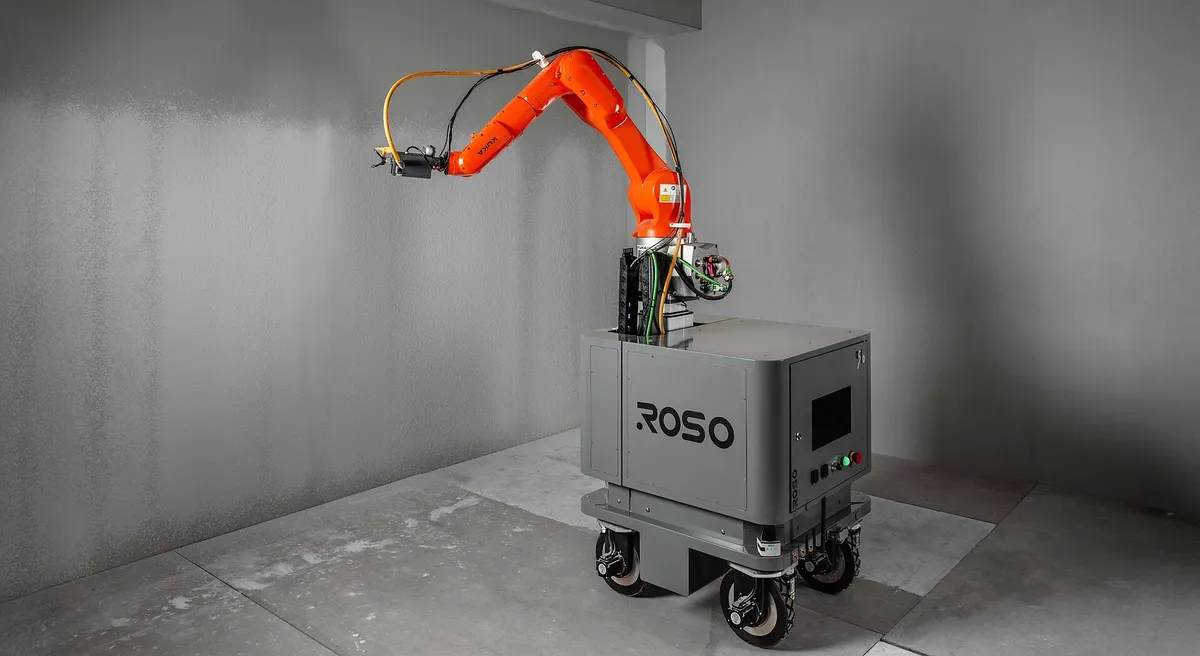
Cheap, imprecise robots can assemble load-bearing structures from lattice blocks designed by MIT researcher Miana Smith, and her team is now bringing the idea to a housing project in Bhutan.
Construction is often blamed for more than a third of the world's greenhouse gas emissions, largely because buildings hold far more material than their loads call for. Smith estimates that buildings put together from her blocks would carry roughly 80 percent less embodied carbon than standard concrete construction, MIT News reported.
A recent PhD graduate, Smith is a visiting researcher with the Center for Bits and Atoms in MIT's Program in Media Arts and Sciences.
Much of the waste comes down to how buildings get made. Oversized, identical parts are cheaper to turn out and put together in large numbers, so builders reach for more material than a structure needs. In a steel-framed building, tailoring each beam's cross section to its job could strip out an estimated 30 to 40 percent of the steel without weakening the frame.
Robots and 3D printers look like the obvious answer, but digital fabrication gives up precision to get there. Setting structural members across a 10-meter span can take machines accurate to within a few millimeters, and those are hard and costly to build.
Smith flipped the problem.
She keeps the machine simple and builds the complexity into the material instead: a small lattice block, which her lab calls a voxel, shaped so that a basic robot with poor precision still sets it in the right place.
Like Lego bricks, she said, "the blocks themselves have a clever mechanical design that prevents error accumulation as the structure grows."
Her robots can be off by about 10 millimeters. Most industrial robots work to tolerances of roughly 100 microns, about 100 times tighter. Smith's machines also cost a few hundred dollars each rather than tens of thousands, so a whole crew of them can work on one structure at once.
Scaling up took a redesign. Earlier, smaller units each needed as many as 24 connectors. Every joint was one more spot where a structure could weaken or assembly could go wrong, and that kept the team from building anything larger with robots.
So the team made the blocks bigger and joined as many of their internal connections as it could in advance, before a robot ever picks one up. Smith said the part of each block that corrects errors now carries load as well. "That's the main thing that enables the robots to build something big that's still load-bearing," she said.
Plywood, bio-based plastics, aluminum and steel have all gone into voxels, each with the same joint design. With plywood blocks, the team has put up room-scale demonstrations that bear load, a small house among them, and it plans outdoor tests at a similar scale.
In Bhutan, the team is working with Druk Holding and Investments, a company based in the country, on its next housing project, Gelephu Mindfulness City. Officials there wanted ways of building that rely on local materials and can be reconfigured as the years go by.
Next, Smith is going after concrete. She plans to use the reconfigurable blocks as formwork to shape concrete more efficiently, since complex molds are very expensive. Through an Activate Fellowship, she's building a startup aimed at greener ways to build with concrete.
Neil Gershenfeld, director of the Center for Bits and Atoms and Smith's PhD advisor, said she is "the best kind, driven by a vision of change she wants to create, rather than by a business plan."
People her age see the climate crisis as impending doom, Smith said. "I want to feel like what I'm working on has an impact," she said.
At the center, a new cohort of students is now studying a wider range of robot behaviors, with robots of different shapes working side by side to build at a larger scale.

You May Also Like

FHWA publishes final rule on retroreflective road markings
The US Department of Transportation’s Federal Highway Administration (FHWA) has announced a…

USDOT releases emergency funding for Death Valley flood repairs
The US Department of Transportation’s Federal Highway Administration (FHWA) is providing US$11.7…
Teledyne FLIR cameras installed along world’s longest mid-span suspension bridge
Teledyne FLIR has provided its dual thermal AID camera technology for the…

National Highways publishes guide to good road design
National Highways, the government-owned company responsible for modernising, maintaining and operating England’s…