Electric seaglider built by MIT alumni aims to link coastal cities at up to 180 mph
2 minute read
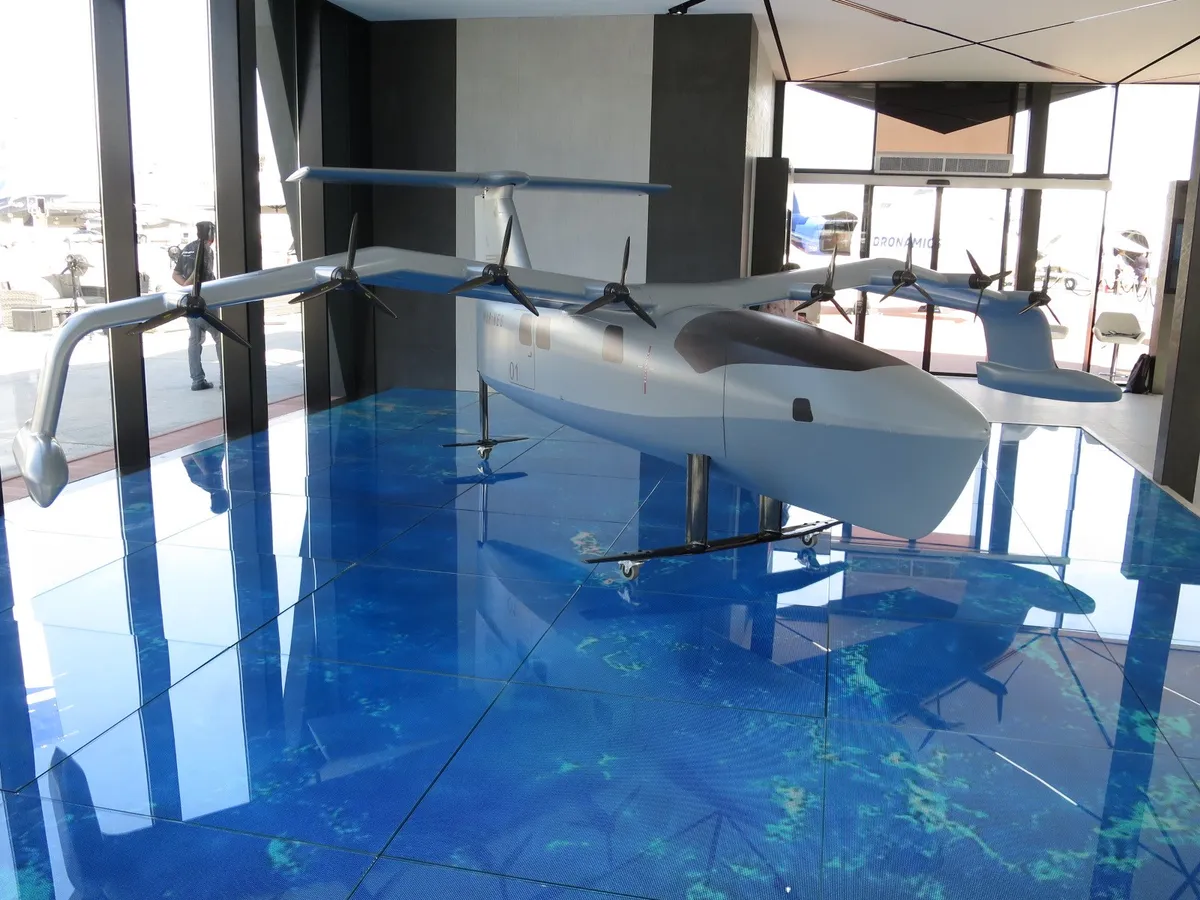
Regent Craft, started by MIT alumni, has built a 50-foot electric seaglider that its founders hope will give coastal travelers the speed of a plane at the cost of a ferry, MIT News reported.
"This is six times faster than a ferry but will be half the cost of an airline ticket," said Billy Thalheimer, a Regent co-founder.
The craft seats as many as 14 passengers, or it can haul roughly 3,500 pounds of freight instead.
At rest it floats. As it gathers speed, it rises onto hydrofoils, then lifts off and flies close to the surface at up to 180 miles per hour.
Thalheimer's case for the craft starts with how slow regional travel has become. He said such trips can take longer now than in the 1950s because of more traffic and congestion.
In his view, the sea is the way around that, because "maritime has underutilized infrastructure, and most people live and move along the coast anyway."
"Forty percent of the world's population lives in and around the coastlines," he said. Among the routes he named were New York to the Hamptons, Miami to West Palm, and trips around the Hawaiian or Japanese Islands.
"It's really like high-speed rail on every coastline of the world," Thalheimer said.
Range comes from staying low. Flying close to a fixed surface cuts drag, which lets the craft cover up to 180 miles on a single charge, and in flight it keeps within one wingspan of the surface.
Electric propulsion also makes it quieter and more sustainable. Its battery has no moving parts, and its motor has only one.
Regent has built two versions of the design, and both have flown. Viceroy, the larger passenger version, has a 65-foot wingspan and made its first flight in September. It is the model meant for passenger trips like the coastal routes Thalheimer described.
Squire, the smaller one, can operate on its own or under remote control. It carries up to 50 pounds and travels 100 nautical miles on a charge at 80 miles per hour. Regent has flown it for defense uses, including simulated U.S. Marine Corps missions in logistics and medical evacuation.
Thalheimer and Mike Klinker, who conceived the vessel together, first met on day one of their undergraduate studies at MIT. "This is going to be an affordable, reliable, and high-speed mode to travel around coastal destinations," Thalheimer said.
Production is set up in North Kingstown, in the U.S. state of Rhode Island. There, the company has opened a 255,000-square-foot factory with capacity for about 70 passenger seagliders a year.
Alaska Airlines, Japan Airlines and Lockheed Martin are among Regent's investors, along with Mare Liberum and AE Ventures. Its founders say they already have a large backlog of orders for the craft.
Regent expects its first seagliders to roll out of the North Kingstown plant toward the end of next year.
Published on
Up next

U.S. grid on 80 percent renewables could make up to 10 percent spare power
You May Also Like

Acorel's Computer Vision Technology Optimizes Urban Transit Without Compromising Passenger Privacy
As cities worldwide accelerate their smart mobility programs, one persistent tension keeps…

How Smart Cities Could Help Us Achieve Equity and Accessibility
Cities around the world have inequity and inaccessibility problems. Transport routes don’t…

SkedGo brings demand-responsive MaaS to Nōgata, Japan
Australian mobility technology provider SkedGo has launched a proof of concept project…
WORLD FIRST: Genoa gets 100% frictionless Bluetooth MaaS
Hitachi Rail has digitally connected public and private hire transport across an…