FAA seeks fixes for fuel leaks and rotor cracks on 206 U.S. Airbus aircraft
3 minute read
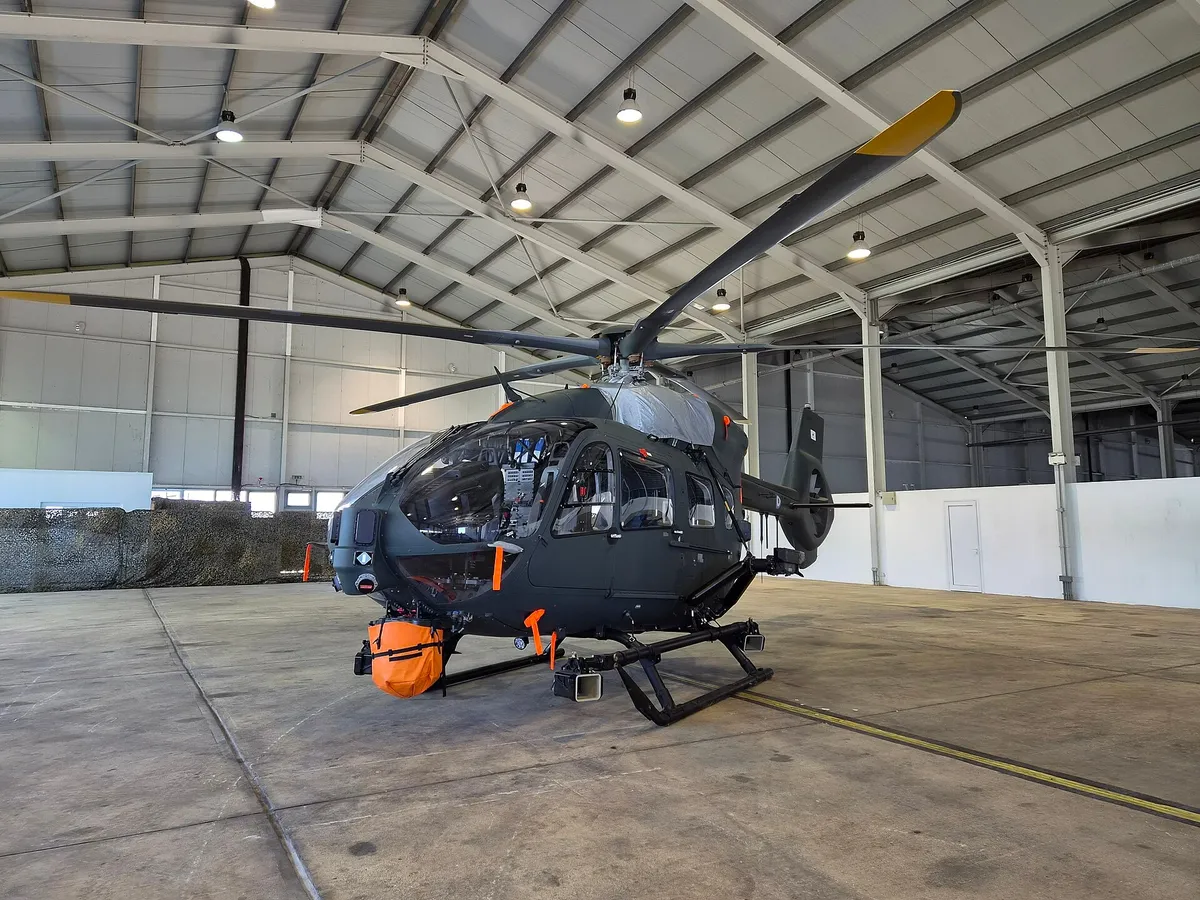
Operators of 206 U.S.-registered Airbus airliners and helicopters face new inspections, part swaps and repairs in six Federal Aviation Administration actions aimed at fuel leaks, engine icing, rotor cracks and fire.
Every one of the six adopts a safety directive first issued by the European Union Aviation Safety Agency, the regulator based in Cologne, Germany. Another country's aviation authority approved the aircraft, which are cleared to fly in the United States, the FAA said.
Four of the actions are proposals, open for public comment into January 2027. Two are final rules that take effect on Tuesday, Dec. 29.
Eight A330 models, from the A330-202 to the A330-941, fall under a proposal covering eight A330 models that would make operators change how a vent intake panel sits on the horizontal tail. Left alone, a gap at the panel "could lead to a fuel leak through the access panel edge," the agency said, raising the risk of fire.
On panel 346AB, operators would take out the NAS1153V9 screws and put in NAS1153V8 screws, following the European agency's directive.
That proposal reaches 43 airplanes on the U.S. register, and comments are due by Monday, Jan. 11, 2027.
All A350-941 and A350-1041 jets fall under a revised A350 proposal, which would replace an earlier directive on engine anti-icing checks. Once the change takes hold, the inspection can't be done until the affected parts have logged at least 2,000 flight cycles since they went in.
If both engines lost their anti-icing protection without anyone noticing, the crew could lose control of the airplane, the FAA said. Forty U.S.-registered airplanes are affected.
Citing the manufacturer, the agency said "some or all of the costs of this proposed AD may be covered under warranty." Comments close Jan. 11, 2027.
After a crew reported their helicopter was vibrating more, a crack turned up in the rotor hub-shaft of an Airbus Helicopters Deutschland MBB-BK 117 D-3. Should that part crack, the gearbox driving the main rotor could fail and the crew could lose control, the FAA said.
Under a new BK 117 D-3 proposal, operators would face repeated inspections, among them eddy current checks, and revised compliance times for hoist work. Air Methods LLC, commenting on the earlier directive, had pressed for checks tied to hours or flight cycles rather than a single inspection.
Operators of the 78 U.S.-registered helicopters would get 30 days to send their findings to Airbus Helicopters. Special flight permits wouldn't be allowed.
Comments are due Friday, Jan. 8, 2027.
In a separate proposal for SA 365 N, SA 365 N1, AS 365 N2 and AS 365 N3 helicopters, certain models would need their tail rotor actuator yaw harness rerouted, a modification the manufacturer developed. A blocked tail rotor pedal control "could result in loss of yaw control of the helicopter," the FAA said.
On the 29 U.S. helicopters covered, the first inspection would come due within 100 hours in service once the directive takes effect. Comments on that proposal close Jan. 8, 2027.
Operators of H160-B helicopters delivered before Oct. 21, 2025, must look for missing fire-resistant sealant in the cargo bay and make corrections depending on what turns up, under the H160-B rule.
Without that sealant, the compartment could lose its fire resistance, leaving the crew with less control of the helicopter in a fire, the FAA said.
Thirteen U.S. helicopters are covered, and the proposal behind the rule drew no comments.
Three SA330J helicopters on the U.S. register fall under the SA330J rule, which keeps earlier requirements while giving operators longer to fit the improved bearing assembly for the main gearbox fan rotor. That earlier directive was meant to stop a fan burst that could damage hydraulic lines and flight controls.
Behind the longer deadline is the manufacturer's finding that limited supplies of replacement parts slow how fast the work can get done.

You May Also Like
London police to test kit reading drones' number plates after event disruption
London, UK: a nearly £2 million trial will give police equipment that…
Boeing 737 and 757 jets face new FAA safety checks starting Dec. 7
Two FAA directives require roll-control tests on Boeing 737s and fuselage repair…
Portland, Oregon, agencies urge residents to plan for snow before it's forecast
Transportation agencies in Portland, Oregon, want drivers, transit riders and pedestrians ready…
Home Office pulls approval for some motorway speed cameras in England
National Highways is ending a camera supplier contract after faults from a…